
What Recordkeeping Mistakes Do Condo Boards Make?
Florida condominium boards frequently encounter recordkeeping problems that create unnecessary legal exposure. Condo association recordkeeping software helps boards avoid these common mistakes through structured, automated processes. This guide explains the typical errors boards make and how technology prevents them.
Paper based systems often lead to lost documents or incomplete historical records. Volunteer turnover compounds these problems when institutional knowledge leaves with departing directors. Therefore, boards need reliable tools that protect against these recurring recordkeeping failures.
This article covers common mistakes, statutory considerations, and practical steps every board should understand. Additionally, readers will find seven actionable steps and a clear summary at the end.
Understanding Common Recordkeeping Mistakes
Condo association recordkeeping software addresses several recurring problems that plague manual record systems. Missing meeting minutes, incomplete financial records, and lost correspondence all create documentation gaps. Consequently, associations face difficulty defending decisions during disputes or audits.
Florida Statute 718 establishes specific retention requirements for various categories of association records. Boards that lack a systematic approach often discard documents prematurely by mistake. As a result, associations risk violating statutory retention obligations without even realizing it.
Property managers observe similar recordkeeping mistakes across many self managed and professionally managed communities alike. Inconsistent filing practices create confusion during staff transitions or management changes. Furthermore, these inconsistencies often surface at the worst possible moments, during disputes or audits.
Incomplete Meeting Minutes and Documentation
Meeting minutes often lack sufficient detail to demonstrate proper board decision making later. Condo association recordkeeping software provides structured templates that capture required information consistently. Every meeting record includes attendance, votes, and discussion summaries automatically organized.
Missing signatures or approval dates on important documents create validity questions during disputes. Automated systems flag incomplete documents before they get filed as final records. Therefore, boards catch these gaps immediately instead of discovering them years later.
Amendment and resolution documentation frequently lacks proper supporting materials showing board authorization. Software tools link related documents together, preserving complete decision trails. Above all, this linkage strengthens the association’s position if a decision faces later challenge.
Disorganized Financial Record Storage
Scattered financial documents make audit preparation significantly more difficult and time consuming. Condo association recordkeeping software organizes invoices, statements, and receipts by category and fiscal period automatically. Accountants locate needed documents quickly instead of searching through disorganized files.
Bank reconciliation records sometimes disappear entirely when boards rely on informal filing methods. Digital systems preserve these critical documents permanently within an organized structure. Consequently, associations always maintain the documentation needed for financial verification.
Vendor contracts and payment authorization records often lack proper cross referencing in manual systems. Software tools connect contracts directly to related payment history automatically. This connection ultimately simplifies vendor dispute resolution and contract renewal decisions.
Premature Document Destruction
Boards sometimes discard records before required retention periods expire under Florida law. Condo association recordkeeping software flags documents according to their specific statutory retention timeline. Staff receive clear guidance about which records remain protected from disposal.
Certain records require permanent retention regardless of age or apparent relevance. Automated systems distinguish these permanent records from those eligible for eventual disposal. Therefore, boards avoid the serious consequences of destroying legally protected documents.
Digital storage eliminates the physical space pressures that sometimes motivate premature document destruction. Cloud based systems accommodate growing record volumes without requiring additional physical storage. Similarly, this capacity removes a common excuse for inadequate recordkeeping practices.
Lost Records During Leadership Transitions
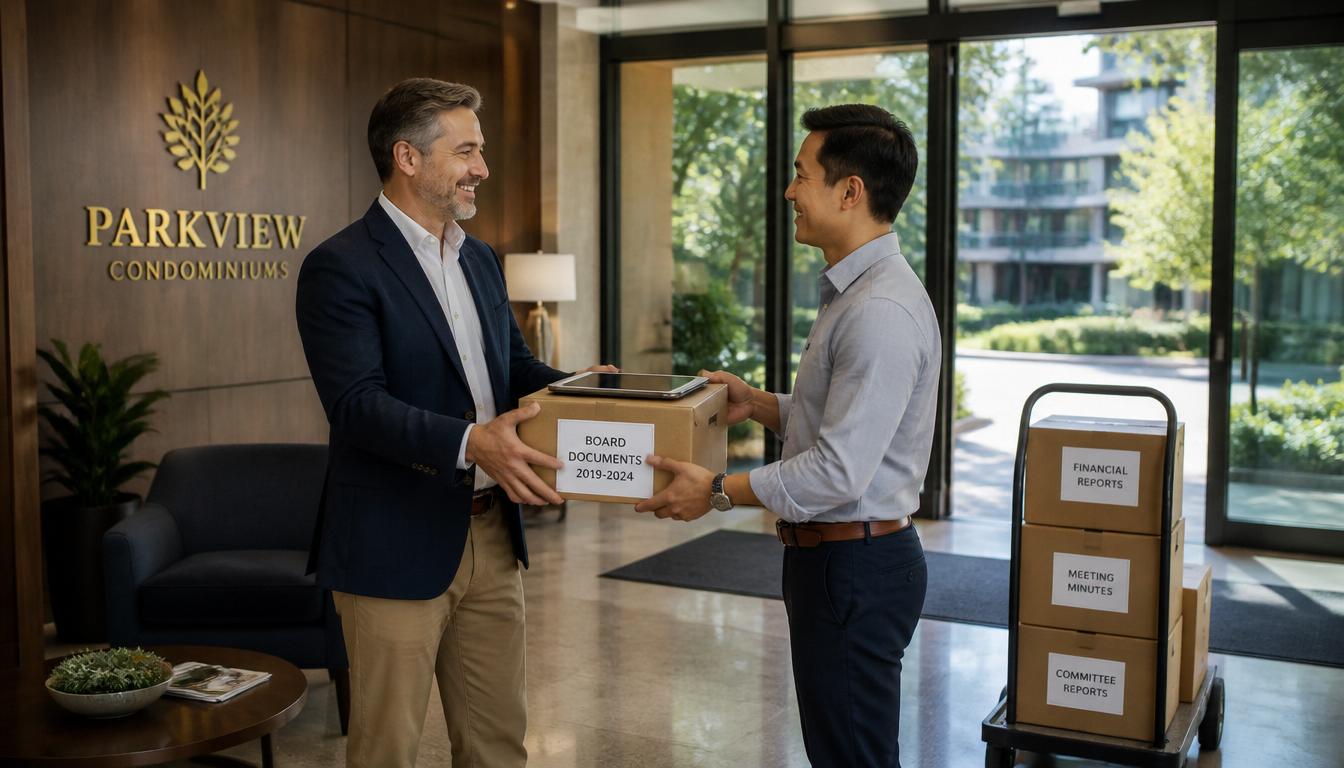
Volunteer board turnover frequently results in lost or misplaced records during handoff periods. Condo association recordkeeping software preserves institutional knowledge independently of any specific individual director. New board members access complete historical records immediately upon taking office.
Departing directors sometimes retain physical documents inadvertently after their term ends. Centralized digital storage prevents this common problem entirely by keeping records accessible institutionally. Moreover, this accessibility ensures continuity regardless of who serves on the board.
Training gaps during transitions also contribute to recordkeeping inconsistencies over time. Software tools provide consistent processes that reduce reliance on individual institutional knowledge. This consistency ultimately protects associations from the disruption that turnover often creates.
Selecting the Right Recordkeeping Platform
Choosing the right system requires evaluating retention management and organizational features carefully. Boards should confirm that any condo association recordkeeping software addresses Florida specific retention requirements comprehensively. Otherwise, gaps in functionality may perpetuate existing compliance risks.
Search and retrieval capabilities matter significantly for practical daily use of the system. A platform that makes finding documents difficult provides little real improvement over paper files. For this reason, boards should prioritize intuitive search functionality during evaluation.
Ongoing support ensures smooth implementation and consistent long term recordkeeping practices. Training resources help staff and board members maintain proper documentation habits. Most importantly, responsive support resolves organizational questions quickly when they arise.
Steps for Achieving Reliable Recordkeeping
- Review current recordkeeping practices and identify gaps or recurring mistakes.
- Confirm specific retention requirements under Florida Statute 718 for each record type.
- Evaluate platforms based on retention flagging and search retrieval features.
- Request a demonstration focused on meeting minute templates and document linking.
- Involve outgoing and incoming board members in transition planning discussions.
- Migrate existing records methodically, verifying completeness during the transfer process.
- Review recordkeeping practices annually to identify and correct emerging gaps.
Key Takeaways
- Condo association recordkeeping software addresses common documentation gaps and errors.
- Florida Statute 718 establishes specific retention requirements for various record types.
- Structured meeting minute templates improve documentation of board decisions.
- Organized financial storage simplifies audit preparation and vendor management.
- Automated retention flagging prevents premature destruction of protected records.
- Centralized systems preserve institutional knowledge during leadership transitions.
- Choosing the right platform requires evaluating retention management and search functionality.
Conclusion
Ultimately, condominium boards gain significant protection by addressing common recordkeeping mistakes proactively. Reduced legal exposure, stronger continuity, and improved audit readiness all result from the right technology choice. Associations that invest in proper systems often avoid costly compliance failures.
Boards evaluating new systems should prioritize platforms built specifically for Florida condominium recordkeeping requirements. Generic storage tools rarely address the statutory nuance that association records demand. Therefore, careful evaluation protects the association from significant legal exposure.
Above all, reliable recordkeeping benefits both the association and individual unit owners. Organized, protected records build trust while safeguarding the community during disputes. Boards ready to correct recordkeeping gaps should schedule a demonstration today.
The information provided on this website is NOT to be considered legal advice. Associations and unit owners should consult with legal counsel for the specific application of the Association’s governing documents and Florida Statutes.